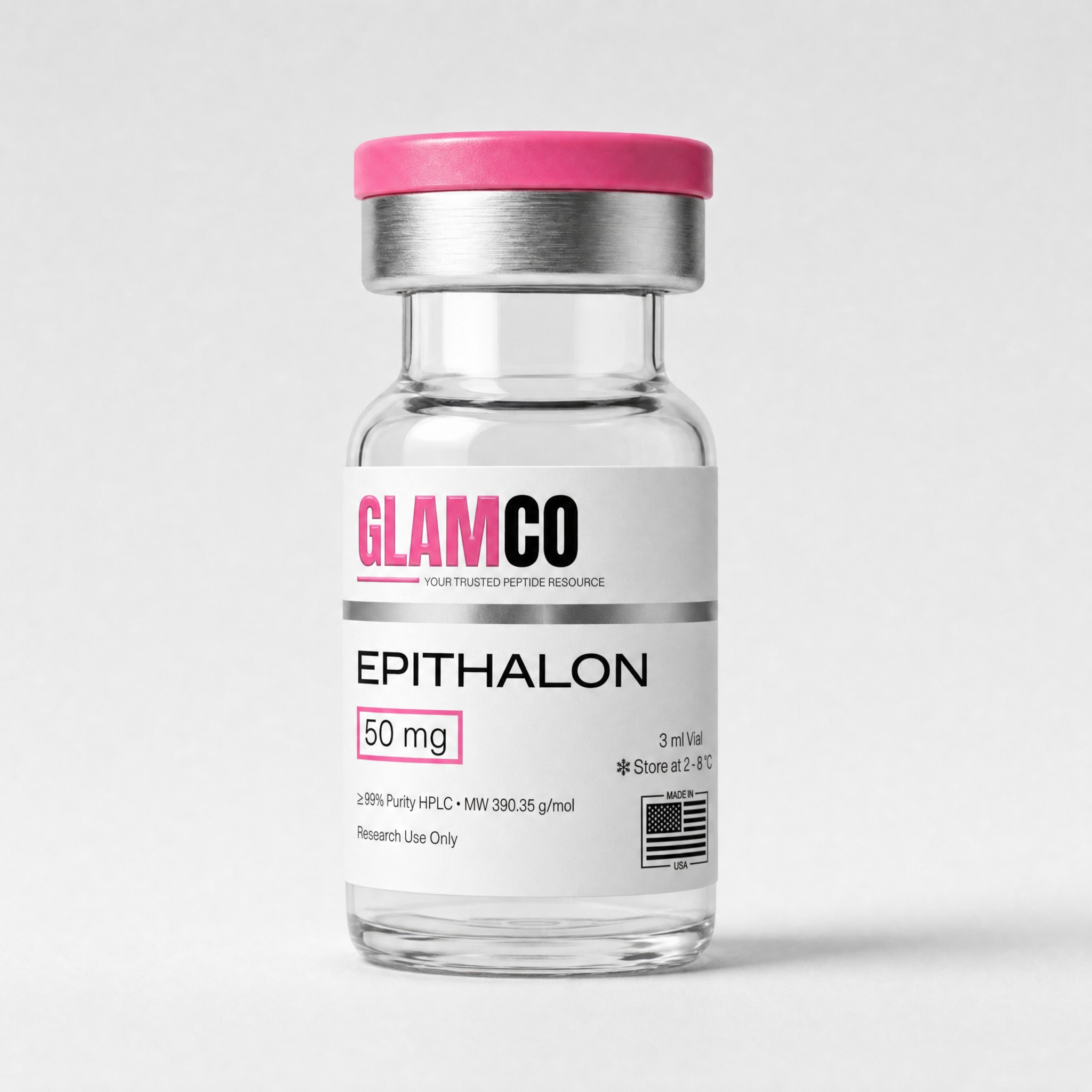
Epithalon
Epithalon (Epitalon, AEDG) is a synthetic Khavinson tetrapeptide (Ala-Glu-Asp-Gly) supplied as a lyophilized powder for in vitro telomerase, pineal / circadian, and Khavinson peptide-bioregulator research. Research use only.
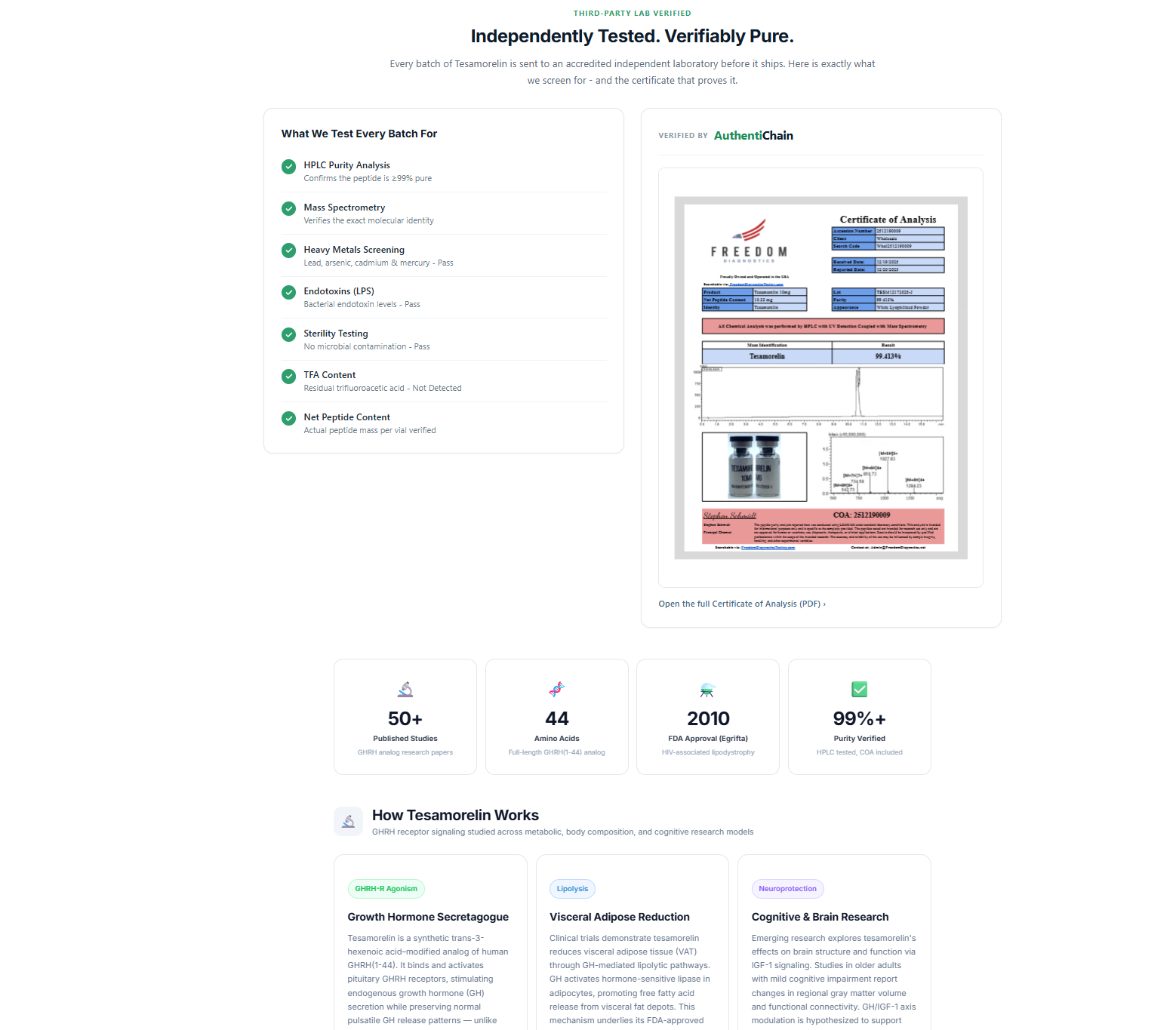
Independently Tested. Verifiably Pure.
Every batch of Epithalon is sent to an accredited independent laboratory before it ships. Here is exactly what we screen for - and the certificate that proves it.
What We Test Every Batch For
How Epithalon Works
Proposed mechanisms drawn from the Khavinson peptide-bioregulator literature. Preclinical / in vitro only; much of the source data is from a single research group and independent replication remains limited.
Telomerase Upregulation (in vitro)
In cell-culture work from the Khavinson group, AEDG exposure has been reported to induce telomerase activity in somatic cells that normally lack it and to extend telomere length in human fibroblast cultures. These findings frame Epithalon as a model compound for in vitro telomere-biology research, not a clinical telomerase agonist.
- Reported induction of telomerase mRNA/activity in cultured somatic cells
- Telomere-length elongation observed in human fibroblasts in vitro
- Mechanism remains hypothetical pending independent replication
Pineal & Melatonin Pathway Modulation
AEDG was originally derived from bovine pineal extracts (Epithalamin). Animal-model studies report changes in pineal melatonin secretion patterns, restoration of circadian melatonin rhythm in aged rats, and altered expression of clock-related genes. Used as a research tool for pineal endocrinology and circadian-pathway models.
- Originally isolated from pineal-gland peptide fractions
- Restoration of melatonin rhythm reported in aged rodent models
- Investigated against pineal-related gene-expression endpoints
Short-Peptide Gene-Promoter Hypothesis
Khavinson's group proposes that short peptides like AEDG cross the nuclear membrane and bind specific gene-promoter regions, modulating transcription of age-associated genes. This "peptide-bioregulator" model is influential within the Khavinson literature but has not been broadly confirmed by independent structural-biology groups.
- Proposed nuclear translocation and DNA-binding activity
- Framework underlies most Khavinson-group aging studies
- Independent replication of the binding model remains limited
What Research Has Shown
Selected effect sizes from Khavinson-group preclinical and cell-culture publications. Independent replication is limited.
Research Applications
Primary in vitro and preclinical research domains for the AEDG tetrapeptide
Telomerase & Telomere-Length Models
Used as a tool compound in fibroblast and somatic-cell cultures to study telomerase induction and telomere-length dynamics, building on Khavinson et al.'s 2003 report of telomerase activation in human cell culture.
Khavinson et al. 2003 ↗Aging & Senescence Cell Models
Investigated in rodent lifespan studies and senescent-cell assays as a probe for the Khavinson peptide-bioregulator framework of aging, including studies on spontaneous tumor incidence and mean lifespan in CBA mice.
Anisimov & Khavinson 2003 ↗Circadian & Melatonin Pathway Research
Applied in aged-rodent and in vitro models to study pineal melatonin output, circadian rhythm restoration, and pineal-related gene expression - reflecting AEDG's origin as a synthetic analog of pineal-derived Epithalamin.
Khavinson et al. 2007 ↗Khavinson Peptide Pharmacology
Reference compound within the broader Khavinson short-peptide ("peptide bioregulator") literature, used to interrogate proposed gene-promoter binding and tissue-specific transcriptional effects of synthetic short peptides.
Khavinson 2002 ↗Compound Information
Technical specifications and analytical profile
Frequently Asked Questions
Common questions about Epithalon research parameters
Sources & References
Selected peer-reviewed publications on the AEDG tetrapeptide