
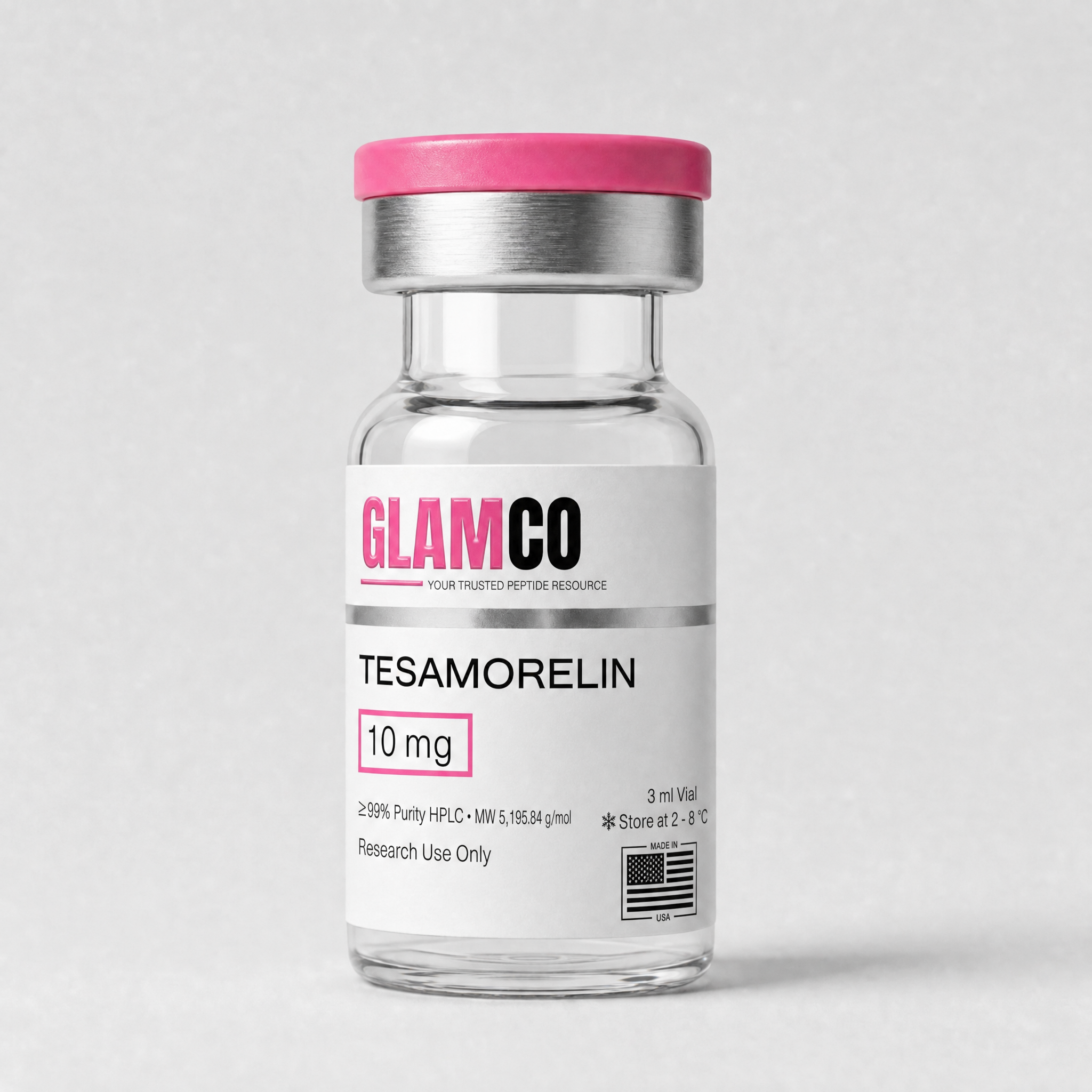
Tesamorelin
Tesamorelin lyophilized peptide for in vitro research. Growth hormone releasing hormone analog with 44 amino acids.
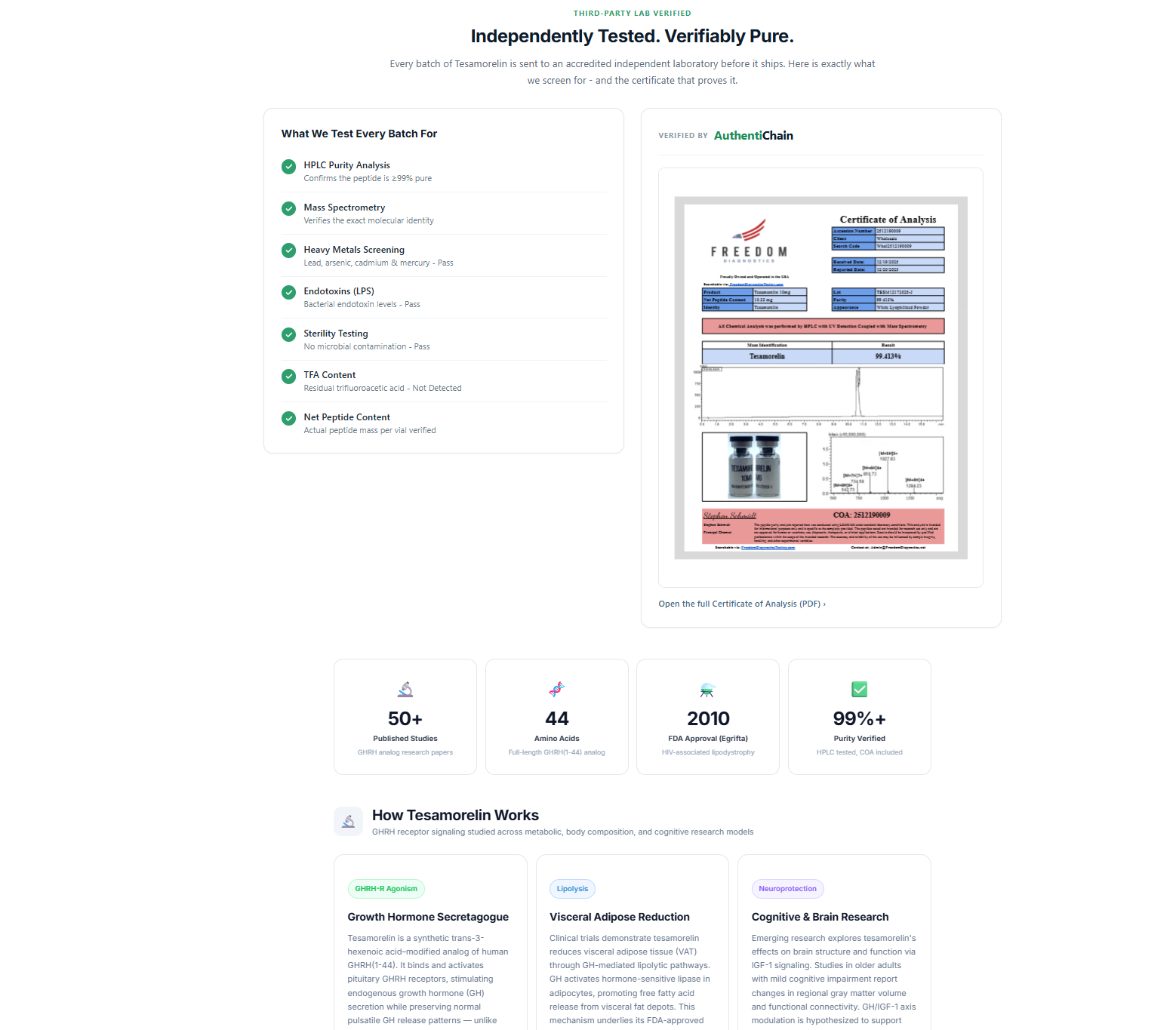
Independently Tested. Verifiably Pure.
Every batch of Tesamorelin is sent to an accredited independent laboratory before it ships. Here is exactly what we screen for - and the certificate that proves it.
What We Test Every Batch For
How Tesamorelin Works
GHRH receptor signaling studied across metabolic, body composition, and cognitive research models
Growth Hormone Secretagogue
Tesamorelin is a synthetic trans-3-hexenoic acid-modified analog of human GHRH(1-44). It binds and activates pituitary GHRH receptors, stimulating endogenous growth hormone (GH) secretion while preserving normal pulsatile GH release patterns.
- Selective GHRH receptor agonism
- Preserves pulsatile GH secretion physiology
- Stimulates downstream IGF-1 production
Visceral Adipose Reduction
Clinical trials demonstrate tesamorelin reduces visceral adipose tissue (VAT) through GH-mediated lipolytic pathways. GH activates hormone-sensitive lipase in adipocytes, promoting free fatty acid release from visceral fat depots.
- Stimulates GH-dependent hormone-sensitive lipase activity
- Selectively targets visceral (not subcutaneous) fat
- Preserves lean body mass in research models
Cognitive & Brain Research
Emerging research explores tesamorelin's effects on brain structure and function via IGF-1 signaling. Studies in older adults with mild cognitive impairment report changes in regional gray matter volume and functional connectivity.
- Increases circulating IGF-1, which crosses the blood-brain barrier
- Associated with changes in cortical gray matter volume
- Under investigation for cognitive aging research models
What Research Has Shown
Key findings from Phase III trials and preclinical publications
Research Applications
Primary areas of tesamorelin investigation
Visceral Fat & Body Composition
Phase III trials confirmed significant reductions in visceral adipose tissue in HIV+ adults with abdominal fat accumulation. Mechanism involves GH-driven lipolysis in visceral depots without disproportionate effects on subcutaneous fat.
Falutz et al. 2010 ↗Brain Structure & Function
Randomized controlled trials in older adults with mild cognitive impairment report tesamorelin's effects on regional brain volume and cognitive performance, mediated through elevated IGF-1 signaling.
Baker et al. 2019 ↗GH/IGF-1 Axis
Research model for studying GHRH receptor pharmacology, GH secretagogue effects, and downstream IGF-1 modulation in the context of GH deficiency states and aging-related GH decline.
Stanley et al. 2011 ↗Lipid & Cardiovascular Markers
Studies report tesamorelin's effects on triglycerides, non-HDL cholesterol, and carotid intima-media thickness in HIV-positive adults, supporting research into GH-axis modulation of cardiovascular risk markers.
Falutz et al. 2014 ↗Compound Information
Technical specifications and analytical profile
Frequently Asked Questions
Common questions about Tesamorelin research parameters
Sources & References
Peer-reviewed publications and clinical studies database