
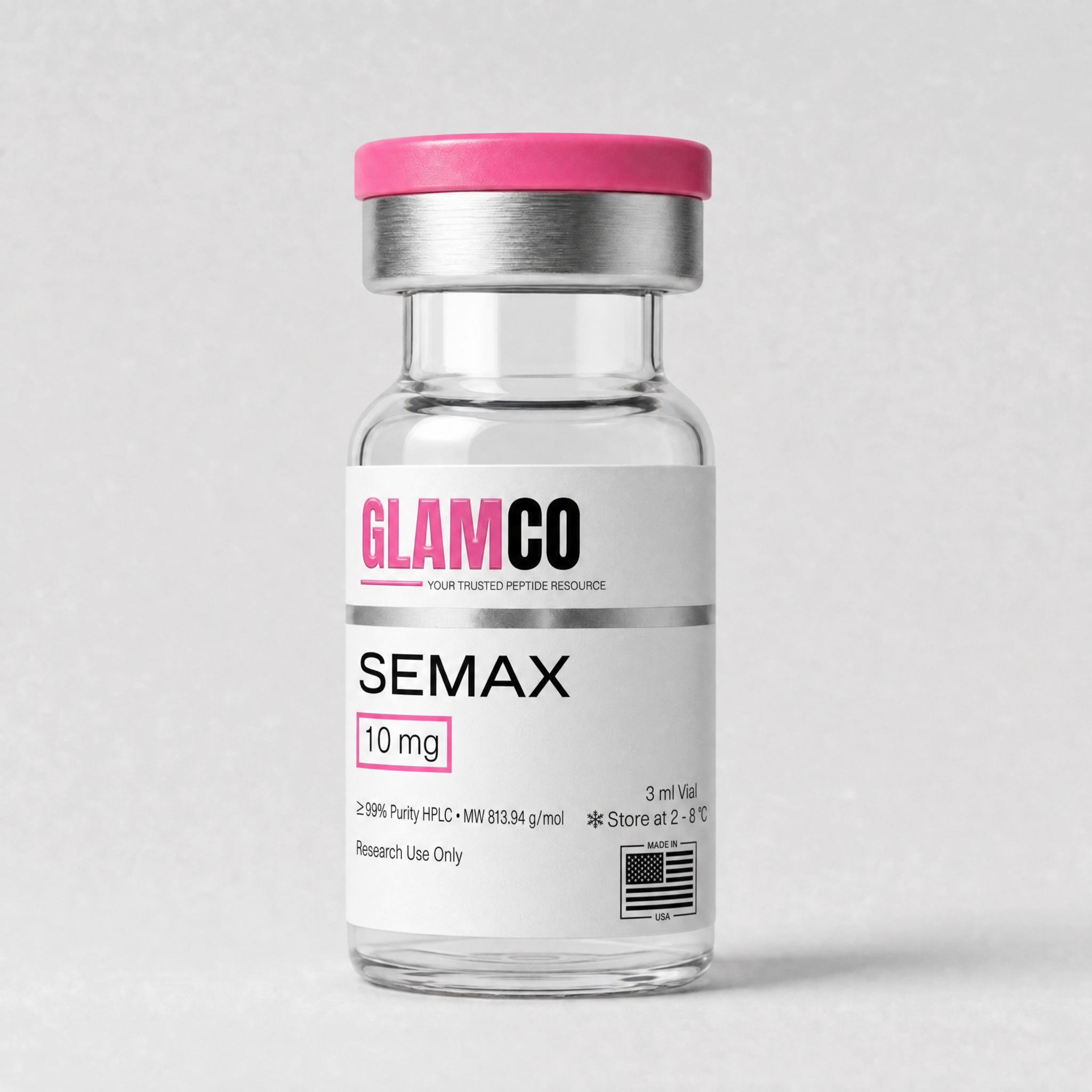
Semax
Semax lyophilized heptapeptide for in vitro research. Met-Glu-His-Phe-Pro-Gly-Pro (ACTH(4-10)-PGP analog) studied in neuroprotection and neurotrophin pathway models.
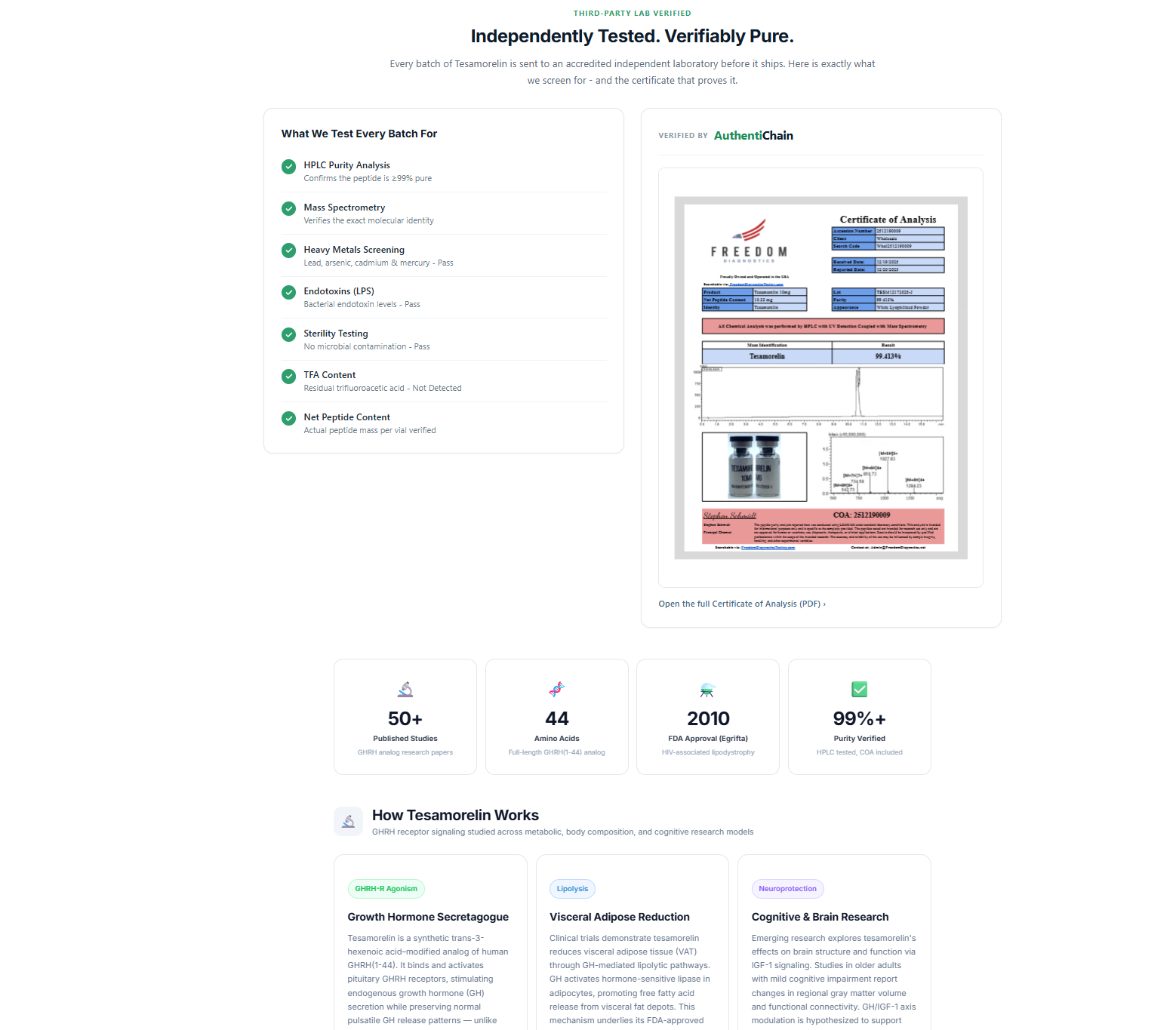
Independently Tested. Verifiably Pure.
Every batch of Semax is sent to an accredited independent laboratory before it ships. Here is exactly what we screen for - and the certificate that proves it.
What We Test Every Batch For
How Semax Works
ACTH(4-10) fragment-derived signaling studied across neurotrophin, monoaminergic, and neuroprotection research models
BDNF / NGF Upregulation Research
Preclinical studies report Semax rapidly upregulates Bdnf and Ngf transcripts and protein levels in rat hippocampus and frontal cortex. Shadrina et al. (PMID 19662538) and Dolotov et al. (PMID 16635254) describe specific BDNF binding and neurotrophin induction following ACTH(4-10)-PGP exposure.
- Induces Bdnf and Ngf mRNA in hippocampus and frontal cortex
- Elevates mature BDNF protein in basal forebrain models
- Activates downstream TrkB signaling pathway research
Neuroprotection & Anti-Oxidative Pathway
In vitro work by Storozhevykh et al. (PMID 17760984) shows Semax protects cultured rat hippocampal neurons against glutamate-induced calcium overload and oxidative injury. The peptide reduces ROS generation and stabilizes mitochondrial function in cortical neuron models.
- Attenuates glutamate excitotoxicity in hippocampal cultures
- Reduces ROS and stabilizes mitochondrial membrane potential
- Modulates inflammatory cytokine expression in ischemia models
Monoaminergic & Cognitive Pathway Modulation
Eremin et al. and Medvedeva (2018 review, PMID 30201095) describe Semax modulation of dopaminergic, serotonergic, and enkephalinergic systems. The peptide enhances enkephalin tone via inhibition of peptidase degradation and influences learning and memory consolidation models.
- Modulates dopamine and serotonin turnover in rat brain
- Inhibits enkephalin-degrading enzymes, raising endogenous opioid tone
- Enhances acquisition and retention in passive-avoidance learning models
What Research Has Shown
Key findings from peer-reviewed Semax publications (rodent and in vitro models)
Research Applications
Primary areas of Semax preclinical investigation
Neuroprotection Preclinical Models
In vitro and rodent studies investigate Semax against glutamate excitotoxicity, oxidative stress, and ischemia-reperfusion injury. Cultured hippocampal neurons show reduced calcium dysregulation and ROS following ACTH(4-10)-PGP exposure.
Storozhevykh et al. 2007 ↗BDNF / NGF Pathway Research
Temporal expression studies of Bdnf and Ngf transcripts in rat hippocampus, frontal cortex, and retina show rapid Semax-induced upregulation. Mature BDNF protein is also elevated in basal forebrain models, supporting neurotrophin pathway research.
Shadrina et al. 2010 ↗Cognitive / Learning Preclinical Studies
Rodent behavioral models report improved acquisition and retention in passive-avoidance and conditioned-reflex paradigms following Semax administration. Effects are linked to neurotrophin induction and monoaminergic modulation in cortical and limbic regions.
Medvedeva et al. 2018 ↗ACTH-Fragment Pharmacology
Semax serves as a stable, non-corticotropic ACTH(4-10) analog for studying melanocortin and proteolytic-stability pharmacology. The C-terminal Pro-Gly-Pro extension blocks rapid degradation while preserving central nervous system activity.
Medvedeva et al. 2018 ↗Compound Information
Technical specifications and analytical profile
Frequently Asked Questions
Common questions about Semax research parameters
Sources & References
Peer-reviewed PubMed-indexed publications