

KPV
KPV (Lys-Pro-Val) tripeptide C-terminal fragment of α-MSH, for in vitro anti-inflammatory and gut-mucosal research applications.
Independently Tested. Verifiably Pure.
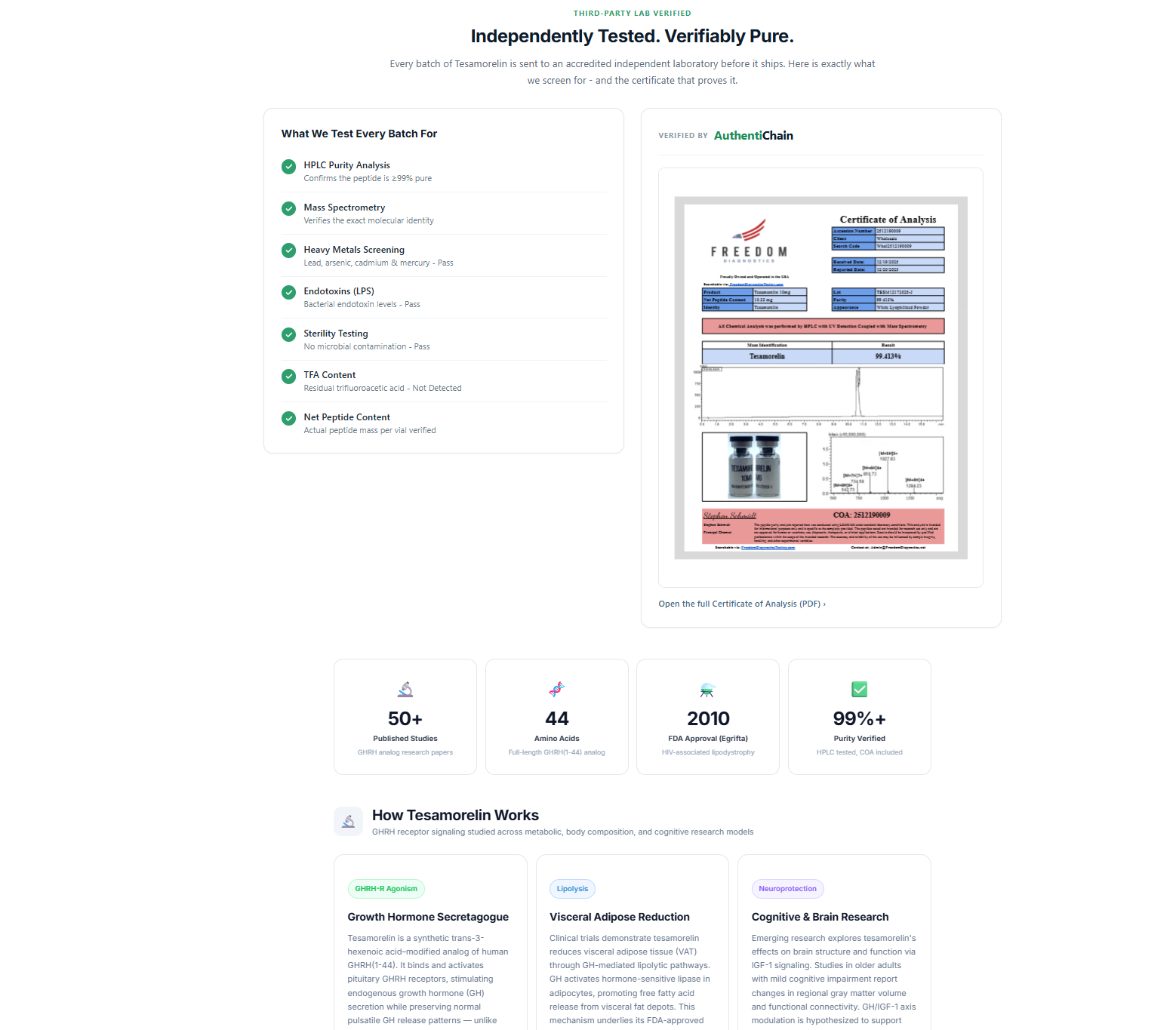
Every batch of KPV is sent to an accredited independent laboratory before it ships. Here is exactly what we screen for - and the certificate that proves it.
What We Test Every Batch For
How KPV Works
Anti-inflammatory tripeptide signaling characterized across NF-κB pathway, mast cell, and gut mucosal research models
NF-κB Pathway Inhibition
KPV represents the C-terminal tripeptide of α-MSH (residues 11-13). In cell culture and in vivo IBD models, KPV reduces nuclear translocation of NF-κB and downregulates downstream pro-inflammatory cytokines (TNF-α, IL-1β, IL-6, IL-8) by interfering with IκB degradation and p65 phosphorylation.
- Blocks NF-κB nuclear translocation in epithelial cells
- Suppresses TNF-α-induced IL-8 secretion in HT-29 cells
- Operates partially independent of melanocortin receptors
Mast Cell Stabilization Research
KPV demonstrates mast cell stabilizing activity in ex vivo and rodent skin/airway models. By restricting degranulation and histamine/tryptase release, KPV reduces local mediator-driven inflammation - a mechanism implicated in contact hypersensitivity and allergic-inflammation models.
- Reduces mast cell degranulation in rodent skin models
- Limits histamine and TNF-α release from activated mast cells
- Attenuates contact hypersensitivity ear-swelling responses
Gut Mucosal & Colitis-Model Research
Preclinical work using DSS- and TNBS-induced murine colitis models reports oral and rectal KPV reduces histological colitis scores, MPO activity, and pro-inflammatory cytokine expression. PepT1-mediated uptake into colonocytes is one proposed delivery route.
- Reduces MPO activity in DSS- and TNBS-colitis models
- PepT1 transporter uptake into intestinal epithelial cells
- Lowers histological inflammation scores at low μM doses
What Research Has Shown
Reported findings from in vitro assays and rodent colitis models
Research Applications
Primary areas of KPV preclinical investigation
IBD Preclinical Research
DSS- and TNBS-induced colitis murine models report oral or rectal KPV delivery reduces histological inflammation, MPO activity, and pro-inflammatory cytokine expression in colonic tissue. PepT1-mediated colonocyte uptake is the proposed route.
Kannengiesser et al. 2008 ↗Anti-Inflammatory Pathway Research
In vitro studies in human colonic epithelial cells (HT-29, Caco-2) characterize KPV's ability to block NF-κB nuclear translocation and downregulate TNF-α, IL-1β, and IL-8 expression - useful for dissecting tripeptide-driven anti-inflammatory signaling.
Dalmasso et al. 2008 ↗Melanocortin Biology Research
As the C-terminal tripeptide of α-MSH (residues 11-13), KPV serves as a tool compound for probing melanocortin-receptor-dependent and -independent anti-inflammatory mechanisms, and for studying minimal α-MSH-derived sequences.
Brzoska et al. 2008 ↗Skin/Dermal Inflammation Research
Rodent contact hypersensitivity and atopic-dermatitis-like models report KPV attenuates ear swelling, mast cell infiltration, and inflammatory cytokine production - supporting research into α-MSH-derived peptides in cutaneous inflammation.
Bettenworth & Nielsen 2014 ↗Compound Information
Technical specifications and analytical profile
Frequently Asked Questions
Common questions about KPV research parameters
Sources & References
Peer-reviewed publications and preclinical studies database