
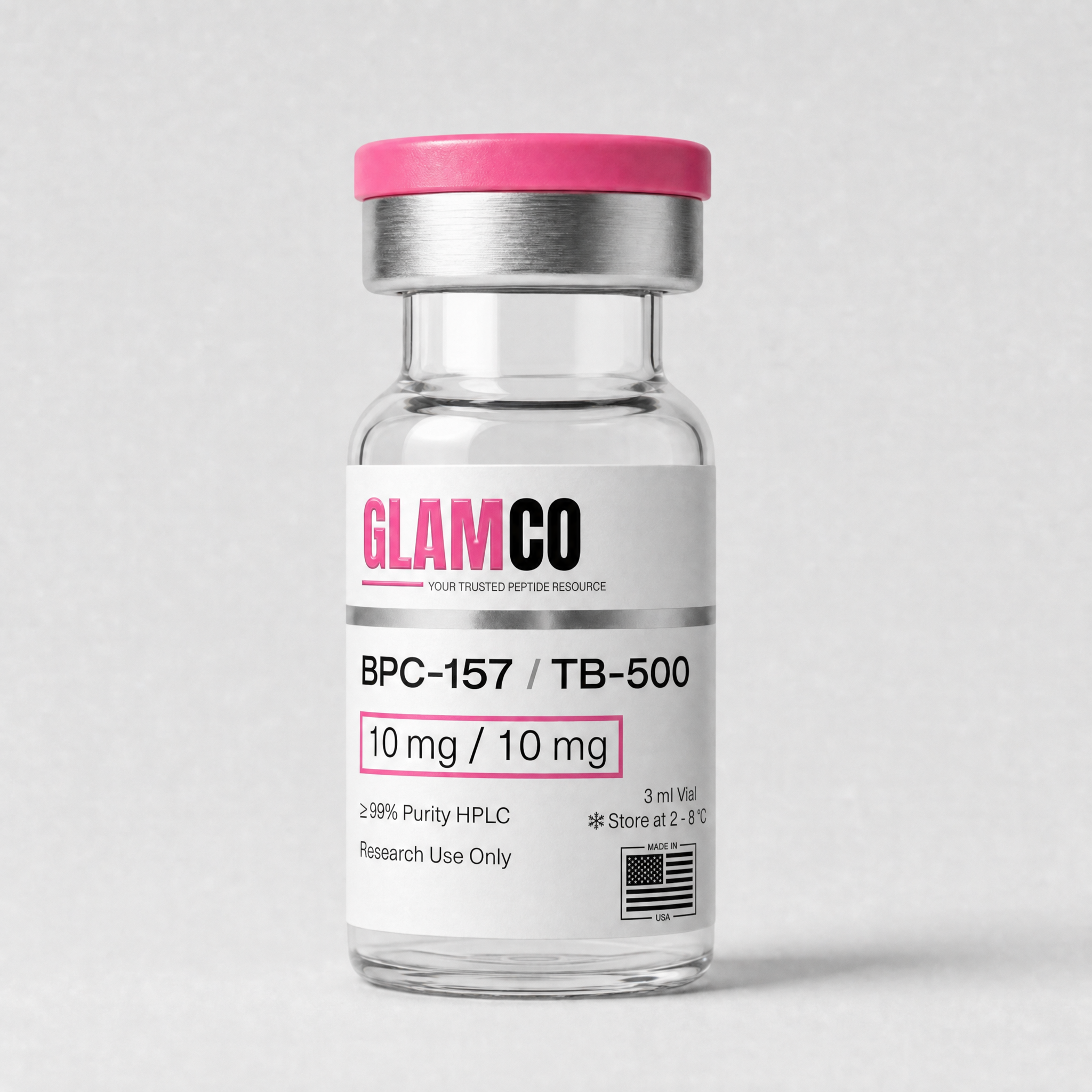
BPC-157 / TB-500
Lyophilized dual-peptide research blend combining BPC-157 (pentadecapeptide derived from Body Protection Compound) with TB-500 (the active N-terminal fragment of Thymosin Beta-4). Used in in vitro and preclinical animal-model studies of angiogenesis, actin cytoskeletal dynamics, and tissue-regeneration pathways.
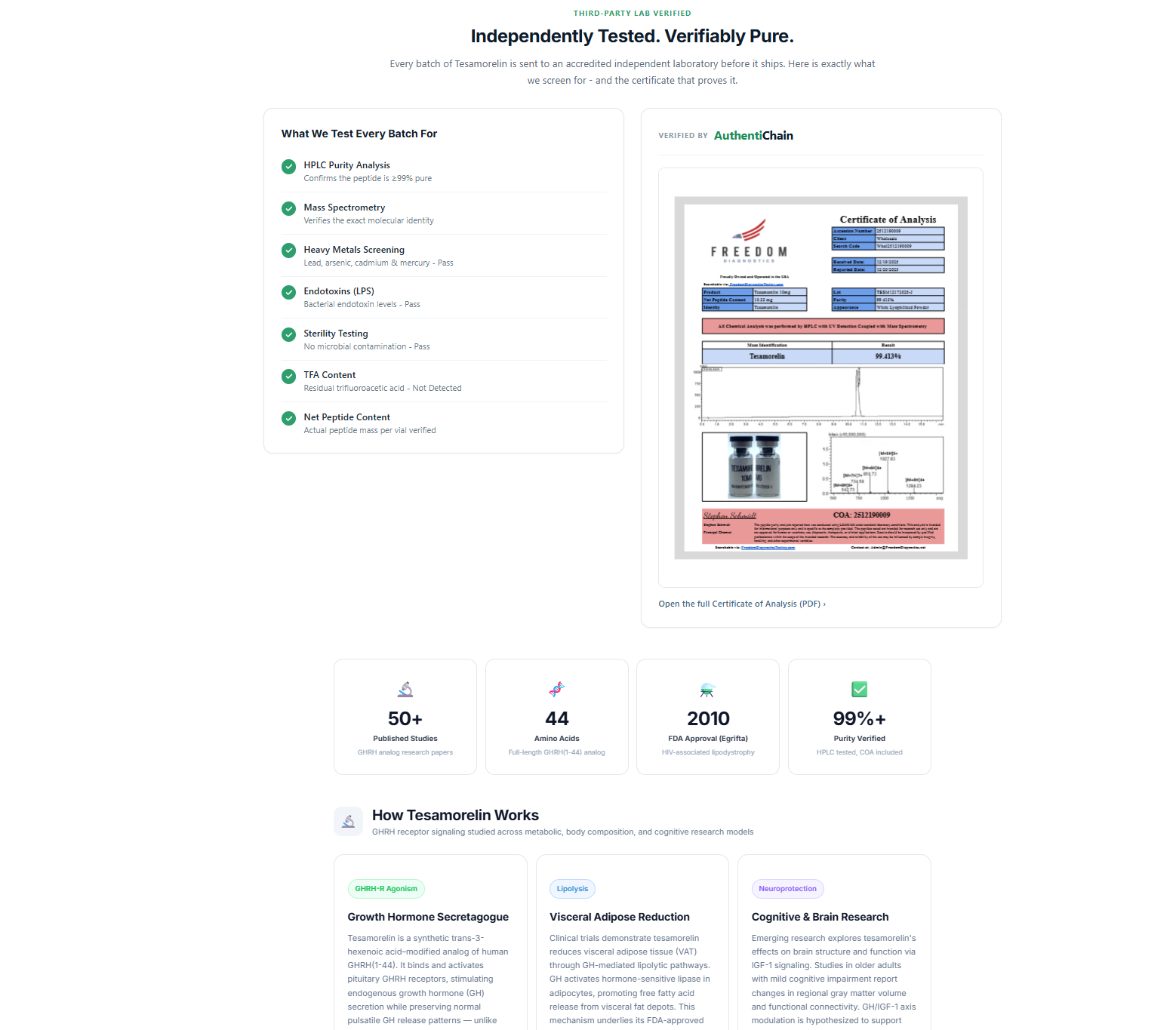
Independently Tested. Verifiably Pure.
Every batch of BPC-157 / TB-500 is sent to an accredited independent laboratory before it ships. Here is exactly what we screen for - and the certificate that proves it.
What We Test Every Batch For
How BPC-157 / TB-500 Works
Complementary pathways studied in in vitro and animal-model research: vascularization, cytoskeletal remodeling, and combined tissue-repair effects.
VEGFR2 & Nitric Oxide Signaling
BPC-157, a 15-amino-acid partial sequence (GEPPPGKPADDAGLV) of Body Protection Compound isolated from gastric juice, promotes capillary formation in muscle and tendon injury models. Mechanistic work links its angiogenic effect to VEGFR2 expression and Akt-eNOS-mediated nitric oxide release in vascular endothelial cells.
- Upregulates VEGFR2 in injured tissue
- Activates Akt-eNOS-NO axis in endothelial cells
- Modulates growth factor and FAK-paxillin signaling
G-Actin Sequestration via LKKTETQ
TB-500 corresponds to the active N-terminal motif of Thymosin β4 (full-length Tβ4 is a 43-amino-acid intracellular peptide). The Ac-LKKTETQ heptapeptide binds G-actin, regulating G/F-actin equilibrium, cell migration, and cytoskeletal remodeling - mechanisms central to wound closure, fibroblast/endothelial recruitment, and tissue regeneration in preclinical models.
- Sequesters G-actin to modulate cytoskeletal dynamics
- Promotes endothelial and fibroblast migration in vitro
- Suppresses pro-inflammatory NF-κB signaling in animal models
Vascularization Meets Cell Migration
The research rationale for blending the two peptides is mechanistic complementarity: BPC-157 drives new capillary formation (delivering oxygen and substrates to the injury site) while TB-500 mobilizes the cellular machinery needed to repopulate and remodel the wound bed. Preclinical tendon, muscle, and dermal models report additive or synergistic outcomes across the two compounds.
- Angiogenesis (BPC-157) + cell migration (TB-500)
- Investigated in tendon, ligament, dermal & cardiac injury models
- Anti-inflammatory effects observed for both peptides
What Research Has Shown
Representative findings from animal-model and in vitro studies of BPC-157 and Thymosin β4 / TB-500
Research Applications
Primary preclinical research domains for the BPC-157 / TB-500 blend
Tendon & Ligament Recovery Research
Rat and rabbit models of Achilles transection and medial collateral ligament injury show BPC-157 improves collagen organization, tensile strength, and fibroblast recruitment. Tβ4 fragments accelerate fibroblast migration in vitro, supporting combined studies in connective-tissue repair models.
Sikiric et al. 2010 ↗Wound Healing Research
Thymosin β4 accelerates re-epithelialization in cutaneous and corneal injury models via actin-mediated keratinocyte and endothelial migration. BPC-157 contributes capillary network formation, supporting combined research on full-thickness wound closure in animal models.
Goldstein & Kleinman 2010 ↗Cardiovascular Tissue Research
In a landmark mouse myocardial-infarction model, Tβ4 administration preserved cardiomyocytes and stimulated epicardium-derived progenitor migration. BPC-157 has been studied for endothelial protection and VEGFR2-NO signaling in vascular injury models.
Bock-Marquette et al. 2004 ↗Skeletal Muscle Repair Research
BPC-157 has been investigated in crushed and transected muscle injury models, where angiogenic and growth-factor pathways correlate with accelerated functional recovery. Tβ4 supports satellite-cell-related cytoskeletal dynamics in regenerating myofibers.
Staresinic et al. 2003 ↗Compound Information
Technical specifications for both peptide components of the blend
Frequently Asked Questions
Common questions about the BPC-157 / TB-500 research blend
Sources & References
Peer-reviewed publications and preclinical studies database