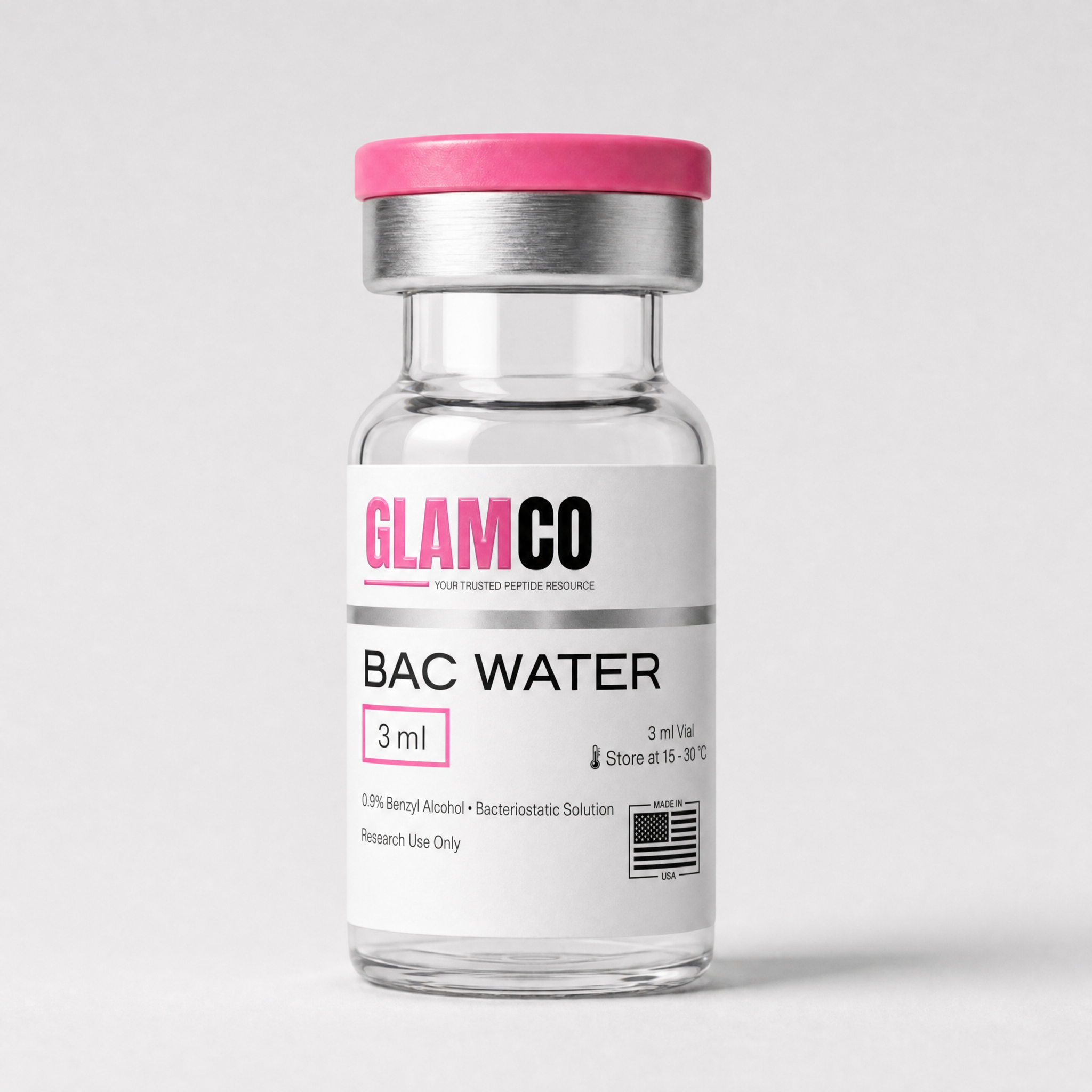
Bacteriostatic water with 0.9% benzyl alcohol preservative for in vitro reconstitution of lyophilized research compounds. Sterile, nonpyrogenic diluent for laboratory research use only.
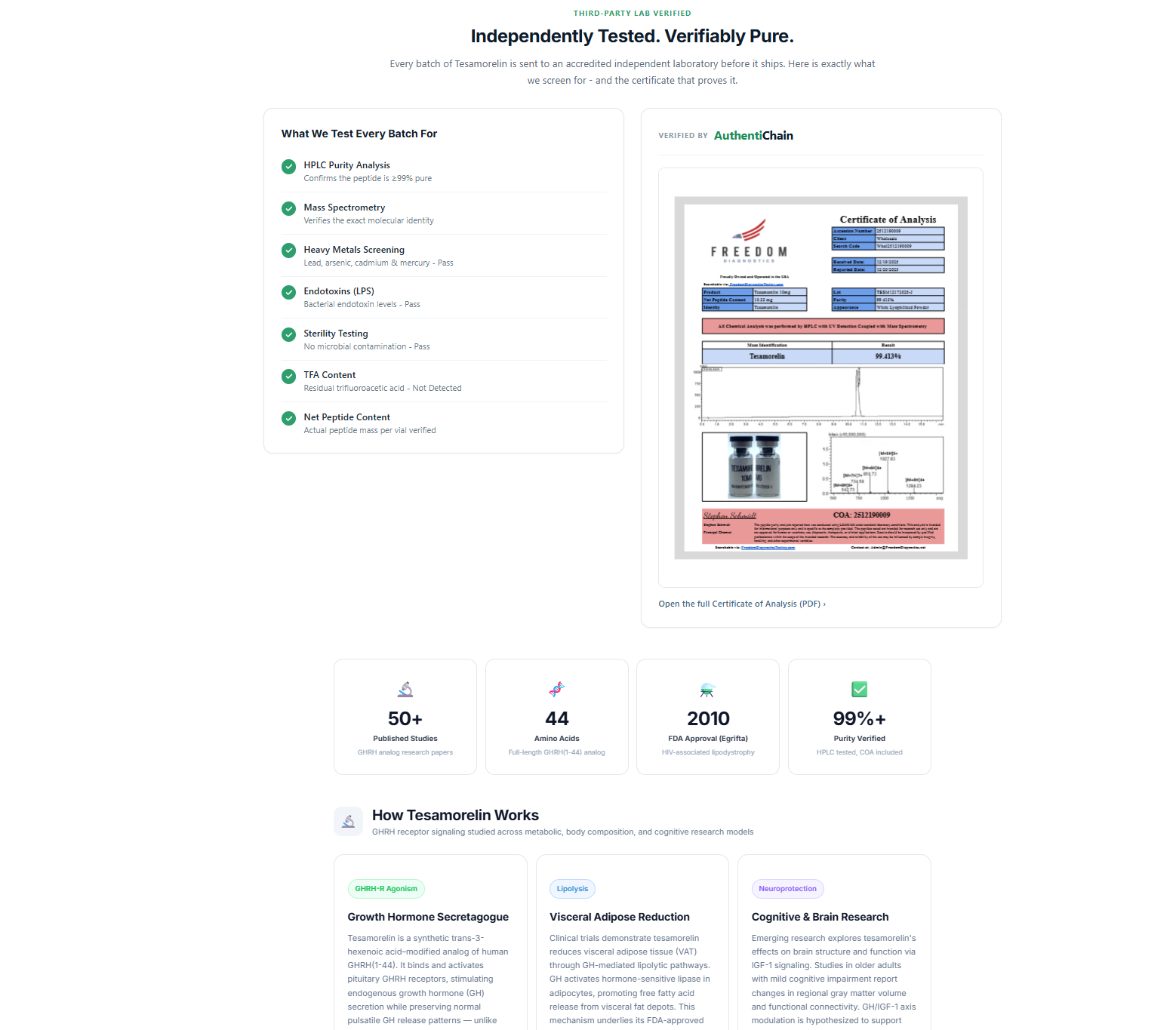
Every lot of BAC Water is sent to an accredited independent laboratory before it ships. Here is exactly what we screen for - and the certificate that proves it.
Benzyl alcohol (0.9%) protects sterile water from microbial proliferation across repeated stopper entries in research-reagent contexts
Benzyl alcohol at 0.9% (9 mg/mL) partitions into bacterial phospholipid membranes, increasing fluidity and permeability. This disrupts membrane-bound enzymes and causes leakage of cytoplasmic contents, halting bacterial replication in the diluent vial.
Lyophilized research compounds require an aqueous diluent to solubilize the cake into a working stock. Bacteriostatic Water for Injection, USP serves as the standard reconstitution medium because the benzyl alcohol preservative permits repeated stopper entries during multi-step in vitro protocols without compromising sterility.
USP-labeled bacteriostatic water vials retain preservative efficacy for 28 days after first puncture under appropriate storage. This window supports time-course studies and multi-aliquot research protocols from a single vial without per-draw sterility loss.
Published data on benzyl alcohol preservative efficacy and USP-labeled multi-dose performance
Primary in vitro use cases for BAC Water as a research-reagent diluent
Used as the standard diluent to solubilize lyophilized research peptides into aqueous working stocks for in vitro receptor binding, enzyme, and cell-based assays. The 0.9% benzyl alcohol preserves the vial across multi-day aliquot draws.
USP Monograph (DailyMed) ↗Bacteriostatic water reconstitutes lyophilized cakes of small molecules and protein research reagents at near-neutral pH, minimizing hydrolysis of labile bonds compared to acidified diluents.
Castro & Patel, StatPearls 2024 ↗Used to serial-dilute stock solutions of research analytes prior to dosing into in vitro test systems. Benzyl alcohol preserves the intermediate dilution vials across the duration of multi-plate assays.
Gustafson et al., AEM 2016 ↗Suitable as a sterile, preserved water source for preparing stock solutions of research compounds that are added to cell culture systems at sub-cytotoxic final benzyl alcohol concentrations. Final assay benzyl alcohol exposure should be controlled.
Handbook of Pharmaceutical Excipients (Benzyl Alcohol) ↗Composition, container, and storage specifications
Common questions about BAC Water as a research-laboratory reagent
USP monograph, FDA labeling, and peer-reviewed publications on benzyl alcohol antimicrobial action