

5-Amino-1MQ
5-Amino-1MQ (5-amino-1-methylquinolinium) is a small-molecule, cell-permeable NNMT inhibitor for in vitro and preclinical research into NAD+ biology, adipocyte metabolism, and methyl-group dynamics.
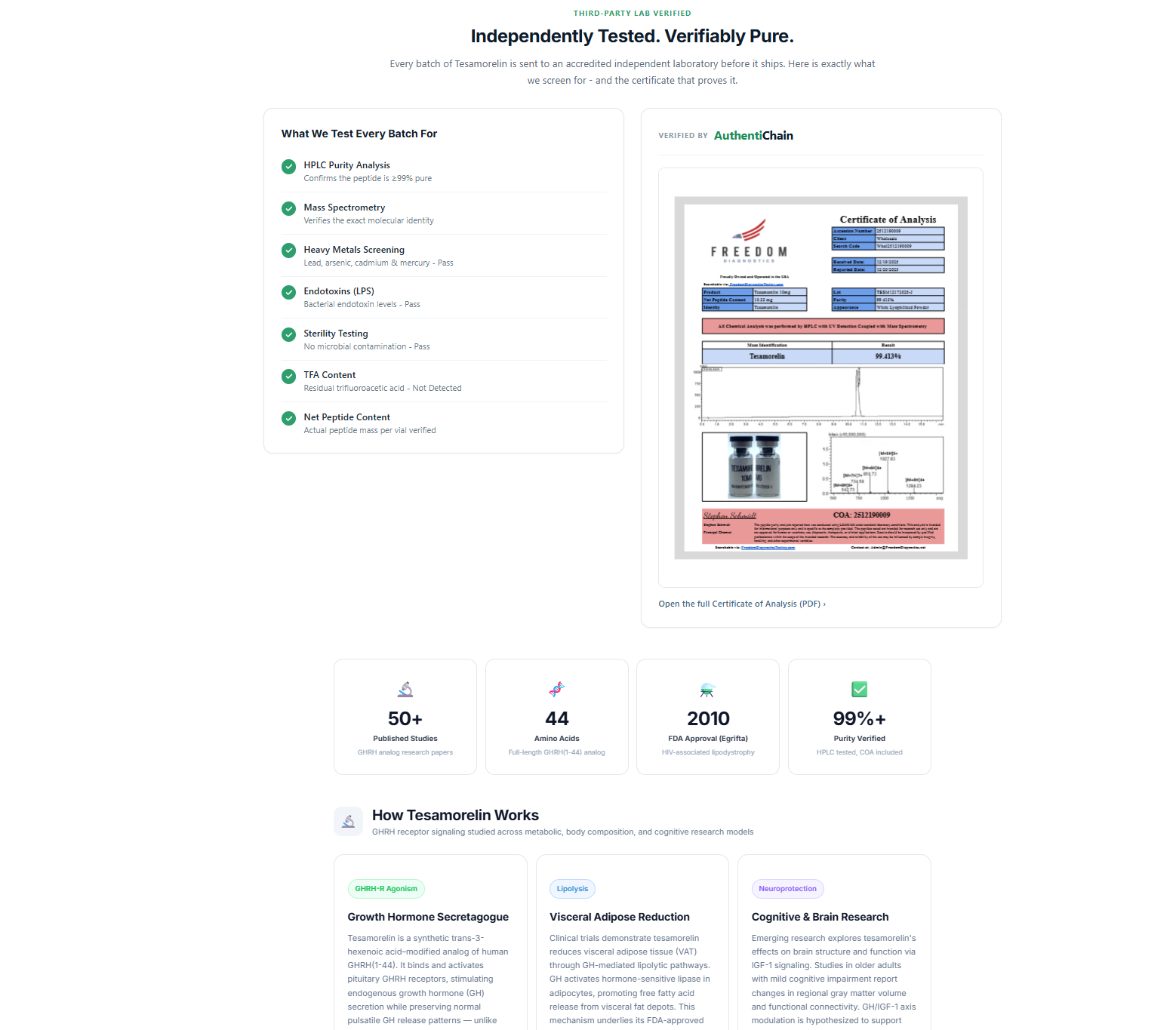
Independently Tested. Verifiably Pure.
Every batch of 5-Amino-1MQ is sent to an accredited independent laboratory before it ships. Here is exactly what we screen for - and the certificate that proves it.
What We Test Every Batch For
How 5-Amino-1MQ Works
NNMT inhibition studied across NAD+ biology, adipocyte metabolism, and methyl-group dynamics research models
Competitive NNMT Substrate Inhibitor
5-Amino-1MQ is a cell-permeable small molecule that binds the nicotinamide (substrate) pocket of nicotinamide N-methyltransferase (NNMT). It has been reported as a selective NNMT inhibitor with an in vitro IC50 near 1.2 uM, with no inhibition of other SAM-dependent methyltransferases or NAD+ salvage enzymes in published assays.
- Substrate-site selective NNMT inhibition
- Methylquinolinium scaffold permeates cell membranes
- Used as a chemical probe of NNMT in vitro
Intracellular NAD+ and SAM Preservation
NNMT consumes S-adenosyl-L-methionine (SAM) and nicotinamide to produce 1-methylnicotinamide (MNA), a metabolic dead-end. In cultured adipocytes, NNMT inhibition with 5-Amino-1MQ has been reported to lower intracellular MNA and elevate intracellular NAD+ (Neelakantan et al., Biochem Pharmacol 2018), preserving methyl-donor and NAD+ pools available for sirtuin and methyltransferase activity.
- Reduces MNA production in adipocyte cell culture
- Increases intracellular NAD+ in vitro
- Spares SAM for downstream methylation reactions
Lipogenesis and Energy Expenditure
In diet-induced obese mouse models, 5-Amino-1MQ administration has been reported to suppress lipogenic gene expression in white adipose tissue, decrease adipocyte size, and reduce body weight without changes in food intake (Neelakantan et al., 2018). These preclinical observations are consistent with a shift from lipid storage toward oxidation in adipocytes.
- Suppressed adipocyte lipogenesis in research models
- Reduced white adipose mass in preclinical mice
- Studied as a chemical tool in NNMT/obesity research
What Research Has Shown
Key findings from in vitro studies and preclinical mouse models
Research Applications
Primary areas of 5-Amino-1MQ investigation
Adipocyte Metabolism Research
5-Amino-1MQ is used as a chemical probe of NNMT in cultured adipocytes and in diet-induced obese mouse models, where it has been reported to reduce adipocyte size, lower white adipose mass, and suppress lipogenic gene expression in vivo.
Neelakantan et al. 2018 ↗NAD+ Pathway Studies
By blocking NNMT-mediated consumption of nicotinamide, 5-Amino-1MQ is studied in cell culture systems exploring NAD+ salvage, sirtuin activity, and the interplay between NNMT expression and cellular energy status in adipose and liver models.
Roberti et al. 2021 ↗Muscle Stem Cell & Aging Models
Preclinical work in aged mice reports that NNMT inhibition with 5-Amino-1MQ enhances muscle stem cell function, fiber regeneration, and contractile force in aged tibialis anterior, supporting its use as a tool compound in skeletal muscle aging research.
Neelakantan et al. 2019 ↗SAM/Methylation Research
Because NNMT is a major SAM consumer in adipose tissue, 5-Amino-1MQ is used to dissect the contribution of NNMT to intracellular SAM, S-adenosylhomocysteine (SAH), and histone methylation balance in metabolic disease research models.
Kraus et al. 2014 ↗Compound Information
Technical specifications and analytical profile
Frequently Asked Questions
Common questions about 5-Amino-1MQ research parameters
Sources & References
Peer-reviewed publications and clinical studies database